27 October — 14 November 2026, Thursdays to Saturdays from 3:00 pm to 6:30 pm.
Curated by João Miguel Barros
OCHRE SPACE presents Appearance and Abstraction by Chinese photographer Li Gang, an exhibition that explores the boundaries between photography and abstraction through an unexpected subject: the horse.
For more than a decade, Li Gang has devoted his photographic practice to horses, moving from observations of their lives and behaviour to increasingly poetic and experimental representations. In Appearance and Abstraction, this exploration takes a new direction. Rather than photographing horses as recognisable subjects, he moves so close to them that their forms begin to dissolve.
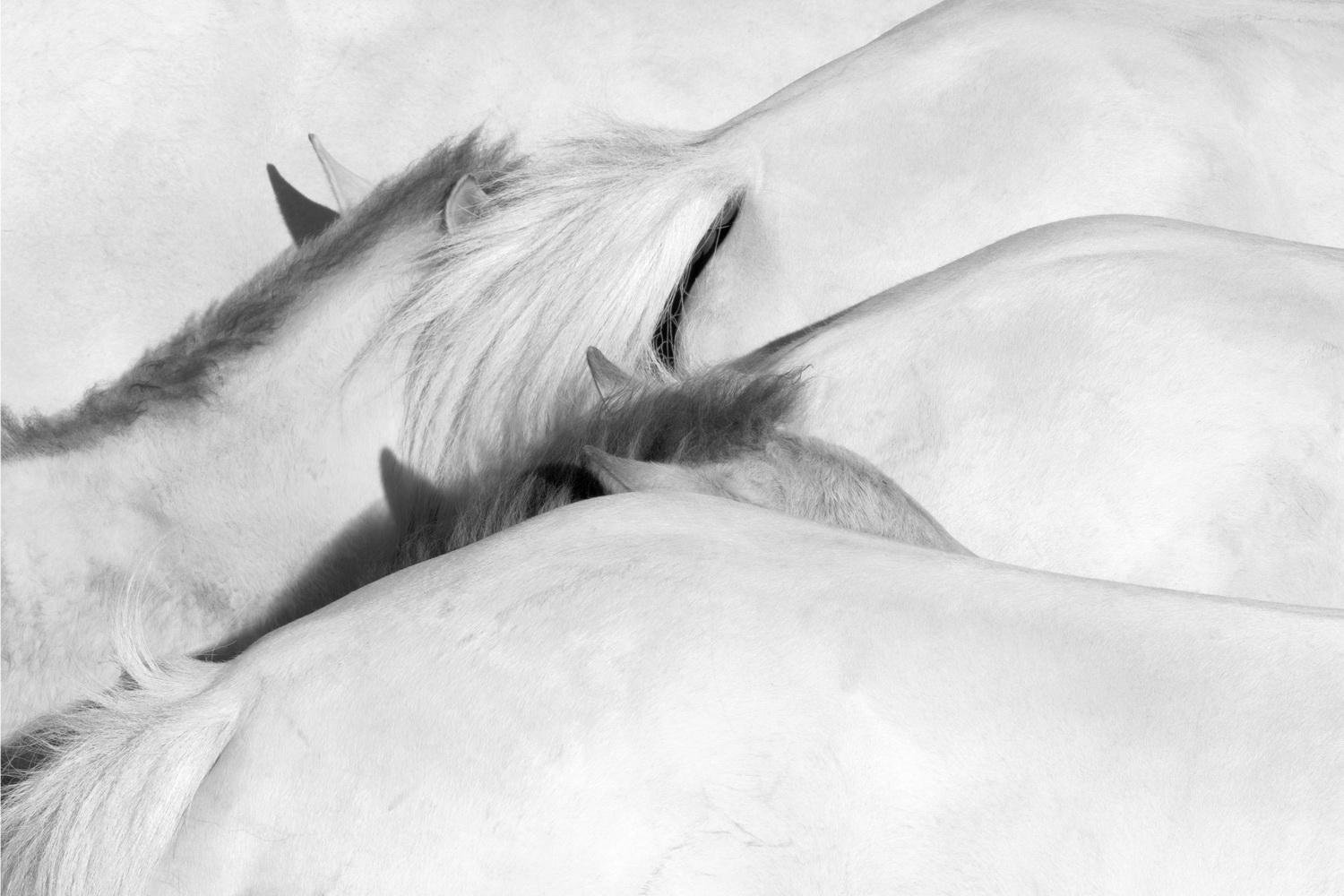
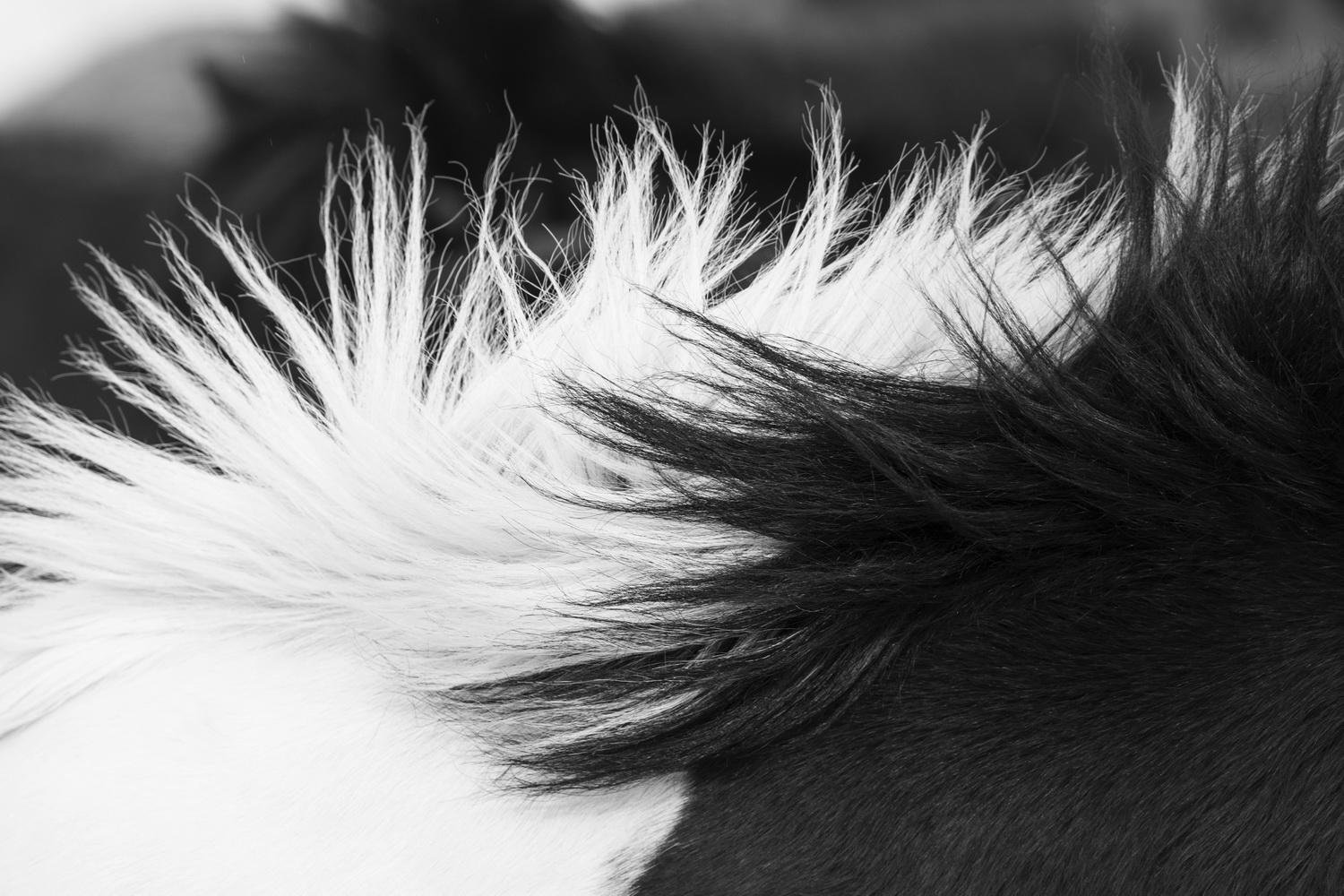
A curve becomes a landscape. A mane becomes a line. A patch of white or black becomes a composition in its own right. Yet these are not invented shapes. Every line, texture and movement belongs to a living animal.
The exhibition draws on a philosophical paradox formulated by the Chinese thinker Gongsun Long in the third century BCE: “A white horse is not a horse.” The argument distinguishes between form and colour, questioning the relationship between the names we give things and the things themselves. Li Gang’s photographs seem to bring this paradox into the visual world. In some images, the bodies of white horses merge so completely that it becomes difficult to distinguish one animal from another. Elsewhere, a mane, an eye or the outline of a back allows the horse to emerge again from abstraction.
Working almost exclusively with black, white and the shades between them, Li Gang explores the relationship between presence and absence, movement and stillness, concealment and revelation. His visual language brings together the expressive qualities of traditional Chinese art and the formal possibilities of Western abstraction.
The relationship between photography and the horse has a long history. In 1878, Eadweard Muybridge used a sequence of cameras to reveal the movements of a galloping horse that the human eye could not perceive. Li Gang approaches the subject from almost the opposite direction. Rather than analysing movement by freezing it, he allows it to blur and dissolve. Galloping horses become traces, their bodies fading into the surrounding landscape.
In other photographs, the animals remain still, their bodies pressed together until individual forms become a single composition. The white of their coats merges with the light; the black of their manes recalls the expressive marks of Chinese calligraphy. What might initially appear to be an abstract image gradually reveals its origin in the physical world.
The photographs also retain something that abstraction alone cannot provide: the presence of the animals themselves. An eye looking towards the camera, a head resting against another body or a mane lifted by the wind reminds us that these compositions are made of living creatures.
Li Gang, born in Henan, China, in 1947, has received numerous distinctions for his photographic work, including the China Photography Golden Statue Award in 2009, the country’s highest distinction in photography. His publications include Reincarnation (2016) and Appearance and Abstraction (2019), the latter recognised by The Beauty of Books in China in 2020.
At OCHRE SPACE, Appearance and Abstraction invites visitors to look beyond recognition and representation. The horse never truly disappears. It remains present in every curve, every shadow and every movement, even at the moment when the image seems to become something else entirely.